
GEO vs SEO: Master AI Search Optimization
Author: Kkonect Us Agency
Search is changing and the way we optimize for it must evolve too.
Traditional Search Engine Optimization (SEO) has served digital marketers for decades, helping brands rank higher on search engines like Google, Bing, and Yahoo. However, with the dramatic rise of AI-powered search tools such as ChatGPT, Gemini, Bing Chat, Perplexity AI, and other generative search platforms, a new optimization discipline has emerged: Generative Engine Optimization (GEO).
In this blog, we’ll break down how GEO compares to SEO, why it matters, and how you can future-proof your digital visibility in a world increasingly dominated by AI search engines.
What Is Generative Engine Optimization (GEO)?
Generative Engine Optimisation (GEO) is the process of structuring, enriching, and optimizing content so that AI-powered search engines recognise, interpret, and incorporate it into generative responses instead of relying on traditional ranked search results.
Unlike SEO which focuses on elevating a website’s position in search engine result pages (SERPs) GEO focuses on ensuring that large language models and AI search systems select your content as part of their generated answers. AI doesn’t just list links it synthesises information from multiple sources to deliver concise, conversational responses to user questions.
In simpler terms:
- SEO = Getting links to your website to show up high in search results.
- GEO = Getting your content into the answers that AI systems generate.
Key Differences Between GEO and SEO
Although SEO and GEO share a goal visibility they operate in very different environments. Here’s how they differ:

SEO (Search Engine Optimization)
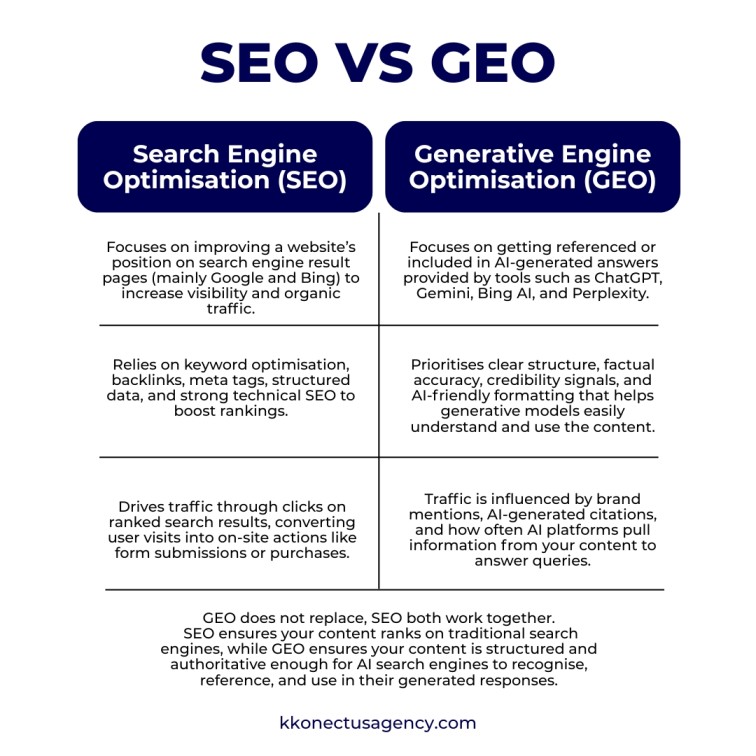
- Focuses on ranking highly in traditional search results.
- Uses keywords, backlinks, technical site structure, metadata, and on-page optimization.
- Success measured by ranking positions, organic traffic, click-through rates, and engagement.
- Designed for search engines that serve ranked pages.
GEO (Generative Engine Optimisation)
- Focuses on being quoted, cited, or used by AI and generative tools.
- Requires clear, structured content that AI models can interpret.
- Success measured by AI mentions, the frequency of AI citations, and the quality of these placements.
- Designed for generative responses rather than ranked results.
Put simply, SEO helps you get seen in lists of links. GEO helps you get seen in AI-generated answers.
Why AI Search Engines Are Changing How People Search
Traditional search engines index pages and rank them based on relevance, authority, backlinks, and hundreds of other signals. However, AI search engines use large language models that absorb and synthesize massive volumes of content to generate conversational responses.
Today’s AI search interactions are no longer about clicking through pages they’re about getting answers immediately which is why brands now need to optimize both for ranking and response inclusion.
This shift is transforming search behaviour:
- Users ask nuanced, conversational questions.
- AI models generate summarized, dialogue-style answers.
- Traditional organic traffic becomes only part of the visibility story.
Will GEO Replace SEO?
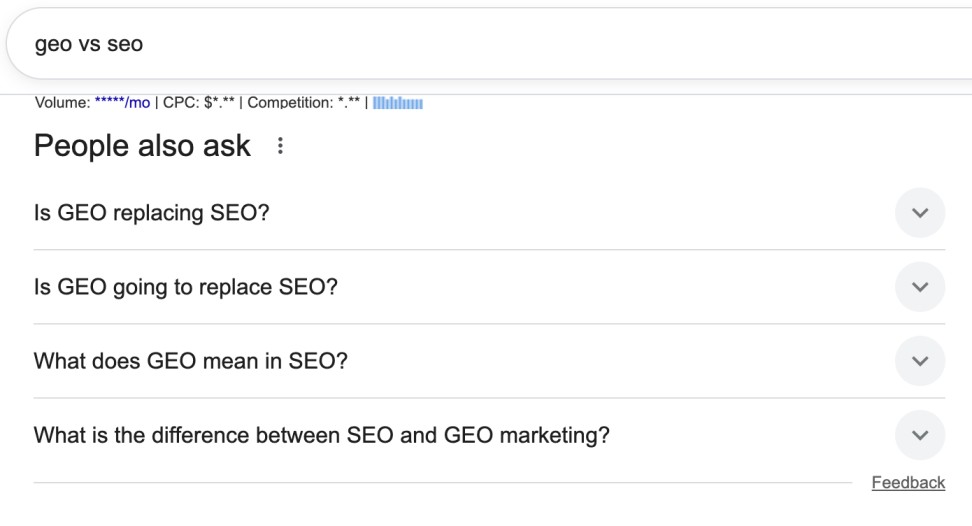
Short answer: No. SEO is not dead; it’s evolving.
SEO remains essential for ranking your site in traditional search engines and it still drives quality traffic. However, AI-driven search is becoming a parallel discovery channel that requires specialized optimization techniques.
In the future, SEO and GEO are increasingly intertwined:
- Good SEO boosts your content authority, which also helps with AI visibility.
- Good GEO increases your chances of being featured in AI-generated answers and traditional search features like snippets.
Think of GEO not as a replacement, but as an extension of SEO in an AI-first world.
How AI Search Engines Work
AI search engines operate differently from traditional crawlers:
- They parse context, not just keywords.
- They understand content meaning and structure.
- They design answers using patterns learned from training data.
- They prefer clear, structured, authoritative content that answers user intent efficiently.
AI search results may include concise paragraphs, bullet lists, FAQs, and direct answers and may cite sources without necessarily linking to them in a traditional sense.
Why GEO Matters for Your Brand
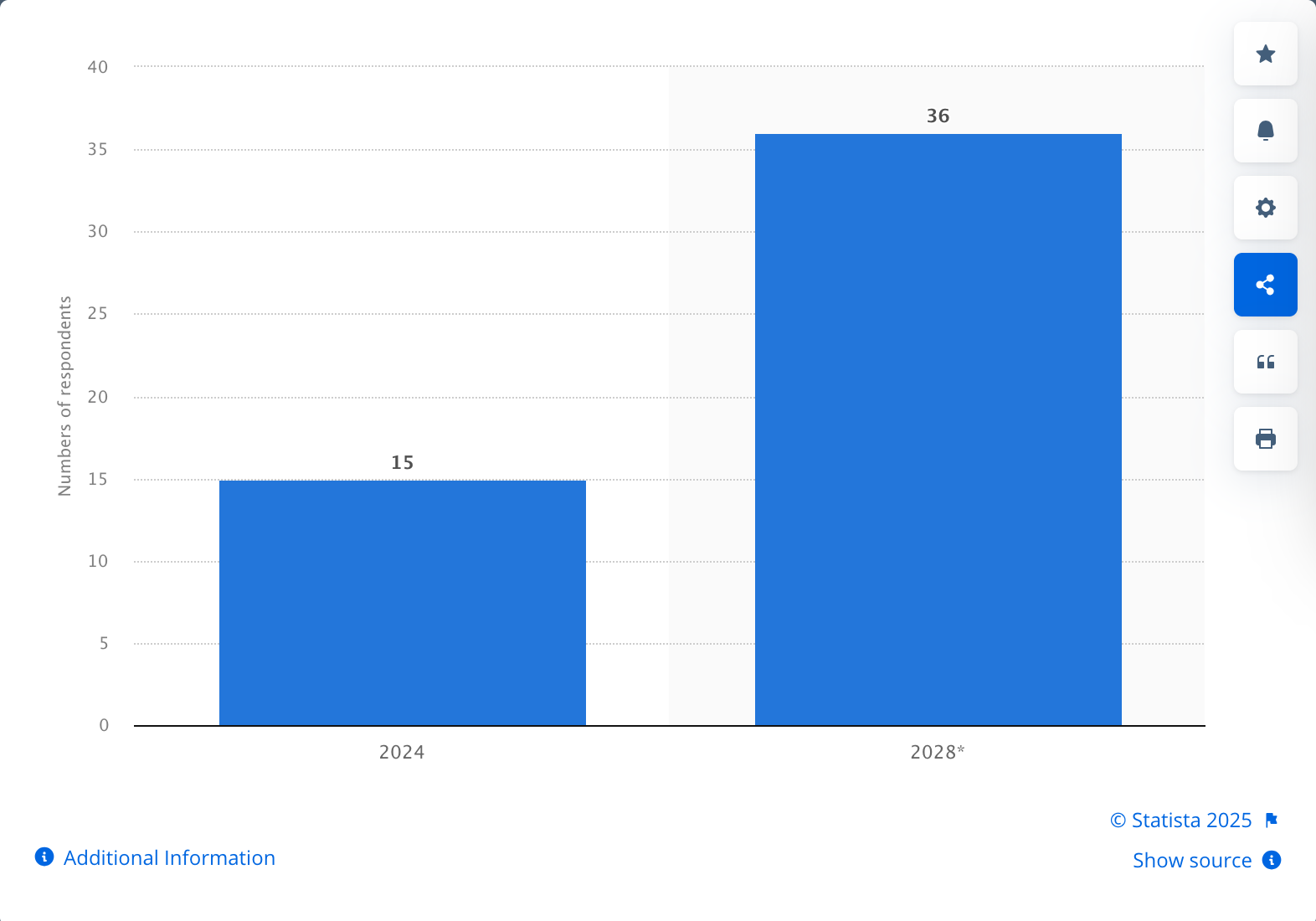
source: Statista – Generative AI Primary Usage in Online Search (2024)
1. You Increase Visibility Where Users Now Spend Time
People are increasingly turning to conversational AI for search. Even if they still use Google or Bing, AI elements like featured snippets, AI Overviews, and integrated generative answers are gaining prominence.
2. Brand Representation in AI Answers Drives Trust
Unlike traditional links, AI answers directly articulate information about your brand. If you’re included, users see your content in the response itself enhancing authority.
3. You Capture More of the User Journey
Traditional SEO captures people searching with intent to click. GEO captures users whose intent is to learn or decide which is increasingly common.
Optimizing for GEO: Best Practices
To optimize for AI search engines, you need to make your content AI-friendly. Here are proven strategies:
1. Understand AI-Generated Responses
Research how AI platforms respond to queries in your niche. See what type of content gets mentioned, how it’s structured, and what formats perform best.
2. Structure Content for Machine Understanding
Use clear headings, bullet points, tables, and concise summaries. Break down information so AI models can easily extract answers.
3. Boost Authoritativeness
Sources that AI trusts tend to get referenced more. Include reputable quotes, data points, citations, and internal references.
4. Focus on User-Centric Answers
AI prioritises useful information over keyword stuffing. Answer questions directly, in context, and with clarity.
5. Keep Technical Foundations Strong
Ensure AI can access your content:
- Fast loading speed
- Structured markup
- Clean navigation
- Clear schema
- These still matter, especially for AI crawlers.
Tracking GEO Success
Measuring success in AI search differs from traditional SEO metrics. Key indicators include:
- AI citations or mentions (how often your content appears in responses).
- Accuracy of representation (does the AI reflect your brand correctly?).
- User engagement with AI results (clicks, conversions after an AI answer).
- Visibility for strategic queries (are you showing up for lucrative topics?).
GEO performance requires new tools and frameworks, but the core logic remains clear: it’s about being part of the answer.
Final Thoughts: Your Future-Ready Strategy
Search technology is not static. As generative AI continues to evolve, visibility now includes traditional search and AI-generated answers. A complete digital strategy must account for both.
SEO + GEO = the new standard for online visibility.
Optimze for traditional rankings and AI relevance and you’ll dominate discovery both on search engine result pages and inside the responses users trust most.
Whether you’re looking to build your online presence, improve search visibility, or grow your brand across multiple platforms, partnering with a trusted Digital Marketing Agency in Dubai makes the process seamless and results-driven. With Kkonect Us Agency, you gain access to expert strategies in SEO, web design, social media marketing, and paid advertising designed to help your business stand out in a competitive digital landscape.
For more information on how our digital marketing solutions can elevate your brand and drive measurable growth, feel free to connect with Kkonect Us Agency, your dedicated Digital Marketing Agency in Dubai.
FAQs
What is the main difference between GEO and SEO?
GEO focuses on getting content included in AI-generated answers, while SEO aims to rank highly in traditional search results.
How can I start optimizing my content for GEO?
Begin by structuring your content clearly, using headings and bullet points, and ensuring it answers common questions in a user-friendly manner.
Will my existing SEO strategies still be effective with the rise of GEO?
Yes, existing SEO strategies remain relevant; however, it’s important to integrate GEO practices to enhance visibility in AI responses.
What metrics should I monitor to measure my GEO success?
Key metrics include AI citations, accuracy of brand representation, user engagement from AI results, and visibility for strategic queries.
How do I ensure my content is AI-friendly?
Make your content clear, authoritative, and structured so AI models can easily interpret and use it to generate responses.